
 by Marlene Bouillon, Dt.P., Ph.D.,
Nutritionist and doctor in physiologie/endocrinology
by Marlene Bouillon, Dt.P., Ph.D.,
Nutritionist and doctor in physiologie/endocrinology
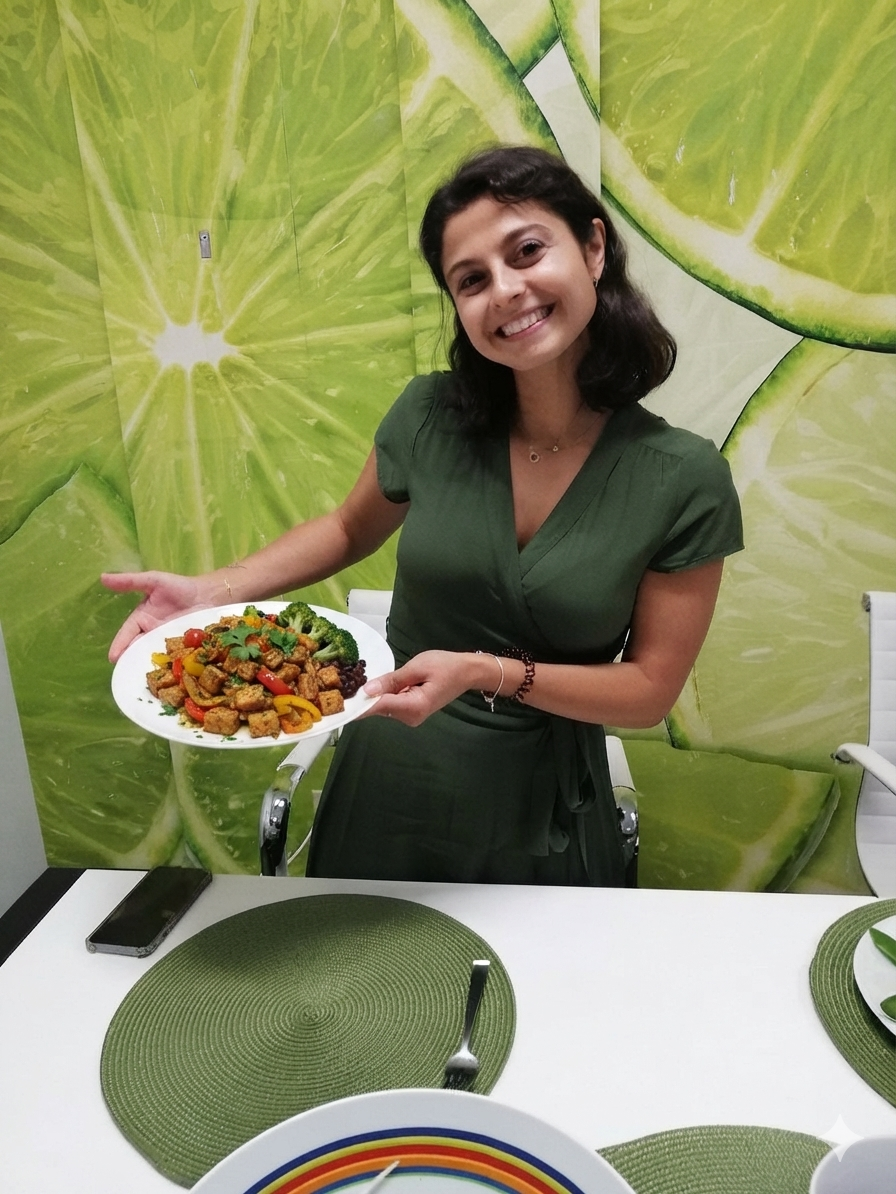
"If I eat less meat, will I get enough protein?" This question often comes up during consultations. And it's a legitimate one: when a food that played a significant role on the plate disappears or becomes less frequent, it's still important to consider what will take its place.
Good news: there's no need to become an expert in amino acids or pull out a calculator at every meal. A well-planned vegetarian or vegan diet can absolutely provide enough protein for adults. This is also the current position of the Academy of Nutrition and Dietetics.
In Canada, the Food Guide also recommends choosing plant-based protein foods more often. Legumes, tofu, tempeh, edamame, nuts, and seeds: the possibilities are numerous. But "plant-based" doesn't automatically mean "rich in protein," and not all sources provide the same quantity or quality. Variety matters, but so does quantity.
Plant Proteins: Understanding Their Nutritional Value
Are all plant proteins equal?
Proteins are made up of amino acids. Some of these are considered essential - or indispensable - because our bodies must obtain them through food.
Different protein sources do not have exactly the same amino acid profile or digestibility. Many plant proteins are lower in certain essential amino acids than animal proteins, but that does not mean they are “incomplete” or inadequate.
For a long time, people were taught that a legume and a grain absolutely had to be combined at the same meal - the classic rice and beans, for example - to obtain a “complete protein.”
This rule is much more rigid than current knowledge supports.
For adults whose diets provide sufficient energy and variety, the different protein sources consumed throughout the day work together to meet amino acid needs. The available evidence therefore does not support requiring perfect protein complementarity at every meal.
How to Optimize Your Plant Protein Intake
But be careful not to replace an old myth with a new one.
There is no need to perfectly combine plant proteins to “complete” them at every meal. However, combining them is often an excellent strategy for getting enough protein.
This strategy can be particularly helpful when smaller quantities of food are consumed. For young children, whose stomach capacity is more limited, or for some older adults whose appetite decreases, including several protein sources in the same meal can help increase protein density without significantly increasing the volume of food.
One Source Is Good. Several Can Help You Get Enough
A plate filled with vegetables, with a few seeds sprinkled on top, does contain protein. But it does not necessarily provide enough to make the meal nutritionally satisfying from a protein standpoint.
This is where combining different sources can be helpful.
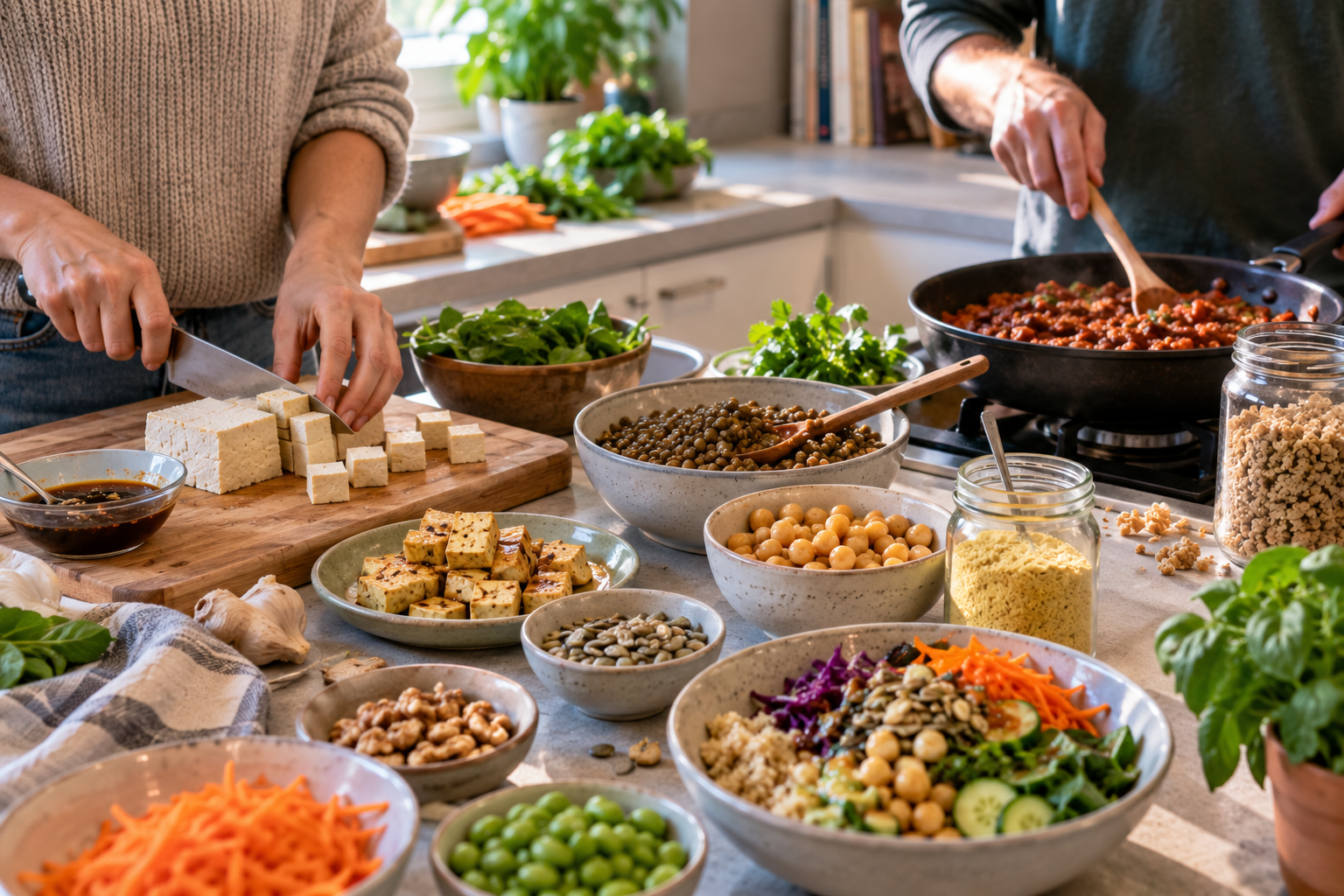
A bowl can include tofu + edamame + quinoa. A chili can combine beans + TVP. A meal-sized salad can include lentils + nuts or seeds. At breakfast, try oats + soy beverage + nuts or seeds. A creamy sauce can even combine silken tofu + nutritional yeast.
These are not new rules to follow, but rather a simple way to think about your plate: small contributions add up.
The amount needed varies according to age, body size, physical activity, health status and many other factors. Rather than looking for a universal amount per meal, start by making sure that meaningful sources of protein are regularly included throughout the day.
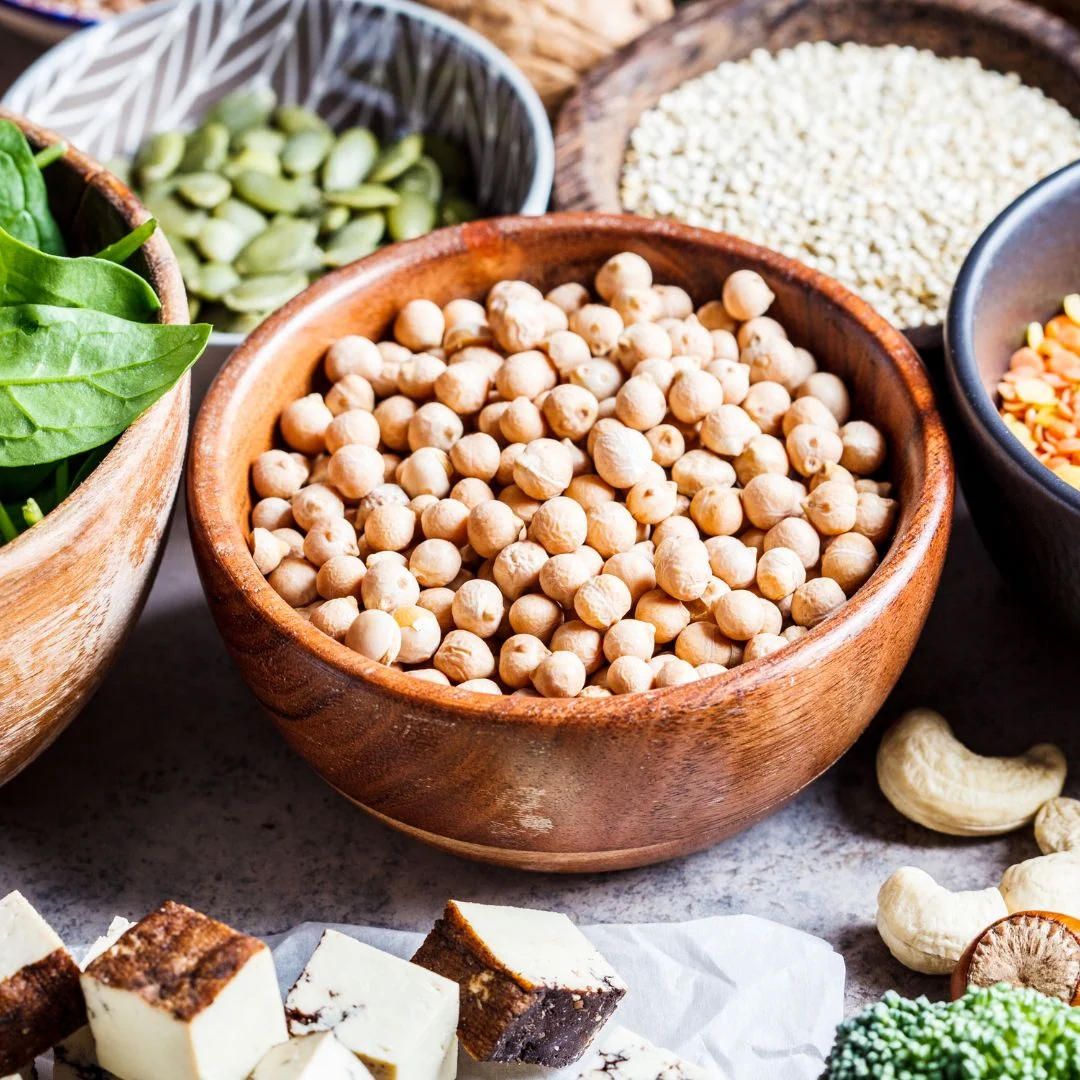
Putting It Into Practice: Discovering Plant Proteins
Much More Than Lentils: Rediscovering Legumes
Chickpeas, lentils and beans have earned their place in many kitchens. But the legume family is much larger.
Lima beans can easily be added to soups, salads and stews. Fava beans, also known as broad beans, have a history close to home: there is no need to travel the world to discover a legume when traditional broad bean soup is already part of Quebec’s culinary heritage.
Then there is lupin, which is still relatively unfamiliar here. Its seeds can be eaten whole, including pickled, or processed into flour.
But what about lupin if you have a peanut allergy?
An important note.
Lupin, like peanuts, belongs to the legume family. Some people with peanut allergies may also react to lupin. This does not mean that everyone will, but Health Canada currently recommends that people with peanut allergies avoid products containing lupin until they have discussed it with their allergist.
Lupin is not considered a priority allergen in Canada. However, when it is used as an ingredient in a prepackaged food, it must still appear in the ingredient list.
Tofu, Tempeh and Edamame: Three Forms of Soy
Soy is particularly versatile. It can be enjoyed whole as edamame, fermented as tempeh, or coagulated into tofu.
And if you find tofu bland, the problem may not actually be… the tofu.
The Freezer Trick
With firm or extra-firm tofu, try:
- freezing it
- thawing it
- pressing it well
- marinating it.
Freezing changes its texture, making it more porous and spongy. Once thawed and thoroughly pressed, tofu absorbs marinades particularly well.
Then, don’t hold back on flavour: garlic, ginger, tamari, lemon, lime, spices, miso, hot sauce, herbs…
You can’t expect tofu to taste like something if you don’t give it anything to taste like!
What About Tempeh?
Tempeh is made from fermented soybeans. Its stronger, slightly bitter flavour can be surprising when you first try it.
One simple trick is to boil or steam it for about 10 minutes before marinating it to help mellow its flavour.
As for edamame, it doesn’t get much easier: add them to a bowl, salad or soup, or simply enjoy them as a snack.
TVP: It’s Not Just Soy
Textured vegetable protein - our well-known TVP - is made from plant proteins that are processed to create a texture similar to ground meat once rehydrated.
Soy-based TVP is the most familiar option, but pea-based TVP is also available.
Should you choose one over the other? Not necessarily.
The amount of protein, texture, taste, ingredients, sodium, allergens, price and uses can vary from one product to another. The Nutrition Facts table and ingredient list therefore tell us more than the word “TVP” alone.
It is also important to distinguish plain dry TVP, which you season yourself, from pre-seasoned, ready-to-cook products.
Both can have a place in your diet. They simply do not always meet the same need… or fit the same budget.
What About Nutritional Yeast?
We often think of nutritional yeast as a small topping with a slightly cheesy flavour. Yet some people - including many vegans - easily use ¼ cup at a time in a sauce, bowl or other dish.
At that amount, it can provide a meaningful amount of protein and is no longer simply acting as a condiment. The exact protein content varies by product, so the Nutrition Facts table remains our best reference.
There is also an important distinction to make when discussing vitamin B12:
not all nutritional yeast necessarily contains vitamin B12.
Some products are fortified - including Red Star - while others are not. A good habit is therefore to check the Nutrition Facts table rather than assuming that “nutritional yeast = B12.”
For someone following a vegan diet, vitamin B12 must come from a reliable and regular source. Fortified foods can contribute to intake, but the specific product, amount consumed and frequency of consumption all need to be considered.
Plant Proteins: Affordable… But in What Form?
“Eating plant-based costs less.”
Sometimes it does. But that statement needs some nuance.
Many plant-based protein foods can be particularly affordable in their simplest forms: dried legumes, dry TVP or plain tofu, for example.
But we need to compare equivalent products.
Dried chickpeas, canned chickpeas and a package of seasoned roasted chickpeas do not cost the same. The same principle applies to dry TVP compared with a ready-to-cook preparation, plain tofu compared with a marinated or prepared version, or plain lupin beans compared with a seasoned ready-to-serve product.
In other words, we also pay for preparation and convenience.
And that is not necessarily a bad expense.
A ready-to-eat option can make a real difference when time or energy is limited. Food accessibility is not measured in dollars alone: available time, cooking skills and family circumstances matter too.
Quebec data also provide an interesting perspective. In the PREDISE study involving 1,147 French-speaking adults in Quebec, higher consumption of plant-based protein foods was associated with better overall diet quality without a significant difference in daily food costs. Lower consumption of animal-based protein foods, on the other hand, was associated with lower costs.
Because this was an observational study based on data collected between 2015 and 2017, it cannot establish that eating more plant-based foods necessarily costs less today.
The takeaway is simpler:
plant proteins can be affordable, but their price depends greatly on the form in which they are purchased.
What About the Environment?
Making more room for plant proteins can also reduce the environmental footprint of our diets.
A Canadian modelling study published in 2024 assessed the partial replacement of red and processed meat or dairy products with plant-based protein foods. In the scenarios studied, replacing some red and processed meat reduced food-related greenhouse gas emissions by up to approximately 25%. The reduction reached up to approximately 5% when plant foods replaced dairy products.
In other words, what we replace matters too.
There is no need to turn every food choice into an environmental calculation. Simply including lentils, beans, tofu, tempeh and other plant proteins more often is already a practical way to diversify your diet.
My Perspective as a Dietitian: Personalized Support
When someone tells me they want to eat more plant-based foods, my first instinct is not to ask what they are going to remove.
I prefer to start by asking:
What could we add?
Discover broad beans. Try TVP in a spaghetti sauce. Give tofu another chance, but this time prepare it well. Add edamame to a bowl. Combine lentils and nuts in a salad. Try tempeh. Use nutritional yeast in a sauce.
Little by little, plant proteins find their place without turning every meal into a calculation exercise.
For adults, an appropriately planned vegetarian or vegan diet can be nutritionally adequate. This is the conclusion of the Academy of Nutrition and Dietetics’ 2025 position paper. It also emphasizes the importance of adapting the diet to the individual, their lifestyle and their culture.
Some situations, however, require greater attention: growth, aging, pregnancy and breastfeeding, high levels of physical activity, low appetite, allergies or other dietary restrictions. A fully vegan diet also requires attention to other nutrients, particularly vitamin B12.
The goal, then, is neither to fear plant proteins nor to assume that any plant food is enough: it is to learn how to give them a meaningful place on your plate.
Need Personalized Support?
Would you like to eat more plant-based foods, reduce your meat consumption, or adopt a vegetarian or vegan diet?
Our registered dietitian-nutritionists can help you build an eating pattern that takes into account your nutritional needs, tastes, food culture, budget, physical activity, allergies or intolerances, cooking skills and everyday reality - without turning every meal into a nutrition equation.
At NutriSimple, science guides us, but eating should also remain simple, accessible and enjoyable.
Book an appointment with a NutriSimple registered dietitian-nutritionist
Frequently Asked Questions About Plant Proteins
Do Grains and Legumes Need to Be Combined at the Same Meal?
No. For someone whose diet provides sufficient energy and variety, it is generally not necessary to combine them at the same meal to obtain all essential amino acids. The different sources consumed throughout the day contribute together.
Combining them can still be an excellent strategy for increasing the amount and protein density of a meal, particularly when smaller quantities of food are consumed.
Can You Get Enough Protein Without Meat?
Yes. For adults, an appropriately planned vegetarian or vegan diet can provide enough protein. However, total intake, variety of sources and individual needs must still be taken into account.
Does Nutritional Yeast Always Contain Vitamin B12?
No. Some nutritional yeast products are fortified with vitamin B12, while others are not. It is therefore important to check the Nutrition Facts table. Someone following a vegan diet should make sure they have a reliable and regular source of vitamin B12.
Are Plant Proteins Really Affordable?
They can be, particularly in their simplest forms: dried legumes, dry TVP, plain tofu, etc. The price can increase when a product is more heavily prepared or ready to eat. Prepared versions can still be very useful when they save time or make plant proteins easier to include in everyday life.
Are Insect Proteins Considered Plant Proteins?
No. Insects are animals, so their proteins are animal proteins. The term “alternative proteins” is not synonymous with “plant proteins.”
Do You Need to Eat Tofu to Get Enough Plant Protein?
Not at all. Tofu is just one of many options: tempeh, edamame, TVP, lentils, chickpeas, beans, broad beans, Lima beans, lupin beans, nuts and seeds can all contribute to protein intake.
Related Articles
- Why Eat Legumes?
- Vegan: Never Without My Nutritional Yeast!
- Expert Tips for Making a Healthy Transition to a Vegan Diet
Recipes to Discover
- Edamame Hummus - a simple way to discover a different way to enjoy edamame.
- Hearty Legume Soup - a comforting way to give legumes a meaningful place in your meal.
- Lentil Squares - a fun way to take lentils beyond soups and stews.
Book an Appointment with a Dietitian
Are you ready to explore a more plant-based way of eating or do you have specific questions about your nutritional needs? Our experts are here to guide you.
Book an online appointment with a NutriSimple registered dietitian-nutritionist
Scientific References
- Raj S, Guest NS, Landry MJ, et al. Vegetarian Dietary Patterns for Adults: A Position Paper of the Academy of Nutrition and Dietetics. J Acad Nutr Diet. 2025;125(6):831-846.e2. doi:10.1016/j.jand.2025.02.002.
- Raj S, Guest NS, Landry MJ, et al. Erratum: Vegetarian Dietary Patterns for Adults: A Position Paper of the Academy of Nutrition and Dietetics. J Acad Nutr Diet. 2025. doi:10.1016/j.jand.2025.156227.
- Mariotti F, Gardner CD. Dietary Protein and Amino Acids in Vegetarian Diets—A Review. Nutrients. 2019;11(11):2661. doi:10.3390/nu11112661.
- Rochefort G, Brassard D, Desroches S, et al. Transitioning to sustainable dietary patterns: learnings from animal-based and plant-based dietary patterns in French Canadian adults. Front Nutr. 2023;10:1148137. doi:10.3389/fnut.2023.1148137.
- Auclair O, Eustachio Colombo P, Milner J, Burgos SA. Partial substitutions of animal with plant protein foods in Canadian diets have synergies and trade-offs among nutrition, health and climate outcomes. Nat Food. 2024;5(2):148-157. doi:10.1038/s43016-024-00925-y.
- American Dietetic Association, Dietitians of Canada. Position of the American Dietetic Association and Dietitians of Canada: Vegetarian diets. J Am Diet Assoc. 2003;103(6):748-765. doi:10.1053/jada.2003.50142. Historical reference to the joint ADA–Dietitians of Canada position; it is not presented as their current position.
- Health Canada and Canadian Food Inspection Agency. Information regarding lupin for Canadians with peanut allergies.
Across Quebec
514 990-7128
418 317-1288
Toll free
1 877 427-6664